Your Fresh Flower Questions – Answered
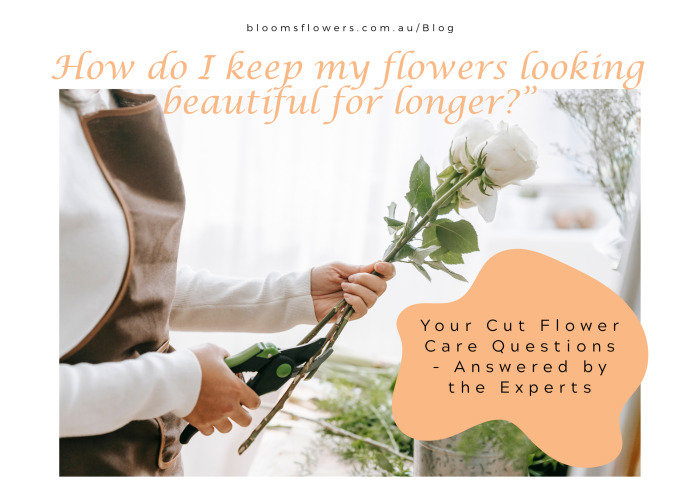
Fresh flowers have a way of transforming a space, lifting moods, and marking life’s special moments. But one question we hear often is: “How do I keep my flowers looking beautiful for longer?â€
The truth is that a little know-how can make a big difference. We often get asked the same questions by customers, so here’s our expert advice to help you enjoy your blooms for as long as possible and enjoy every last petal.
1. Why do I need to re cut flower stems?
Flower stems naturally seal over once they are cut, whilst it is nature’s way of protecting them from losing any more hydration, in turn, it blocks water uptake. Re cutting the stems (by 1–2 cm at a 45° angle) reopens the pathway, allowing your flowers to drink more efficiently and stay fresher longer. Some flowers such as orchids require a larger surface area than 45° to take up water, your qualified florist will be able to advise, the correct angle.
2. Why do I need to change the vase water?
Over time, bacteria build up in vase water, which can clog stems and shorten the life of your flowers. Changing the water every 2–3 days keeps it clean and fresh—helping your blooms thrive. Just as the cleanliness of the vase is just as important, it you use a vase that is not clean, bacteria will begin to grow as soon as you put your flowers into it.
3. Does, where I place my flowers affect their longevity?
Yes! Flowers last longer in a cool spot, away from direct sunlight, heating vents, draughts, and ripening fruit (which gives off ethylene gas that speeds wilting).
4. Do flowers sold on a footpath or in a supermarket / fruit and vegetable shop last the same amount of time as those from a florist shop?
Things to consider before you purchase your flowers are:
Flowers displayed in warm stores or outdoors in unregulated environments can be stressed by exposure to ethylene gas caused by fruit and indoor heating or exhaust fumes from vehicles, then there are temperature changes, wind, and direct sun. All these factors speed up the lifespan of your flowers, resulting in less vase life.
Professional florist shops, store blooms in climate-controlled conditions, ensuring better hydration, quality, and in turn longevity.
5. Why have some flowers wilted before others, and what should I do?
Different flowers have different requirements and lifespans. For example, flowers with fragrance naturally have a shorter lifespan due to their fragrance emitting ethylene gas (speeding up the flowers lifespan) such as stocks, poppies, and fragrant roses. Ever wondered why commercial roses, have no fragrance? They are genetically modified to remove their fragrance, to increase the vase life. Then there are flowers who dislike or refuse being put into floral foam as it blocks their stems. Whereas flowers like chrysanthemums and liliums may last weeks. As stems reach the end of their lifespan, remove wilted stems promptly to prevent bacteria from spreading and to keep your arrangement looking fresh. As a guide, think of how long those flowers would bloom naturally if still on the plant and that will be a guide as to how long you should expect them to last in a vase.
6. Why do some flowers, wilt by hanging their heads?
Some blooms, like tulips, have natural tendency to follow light, and particular varieties naturally waterfall as opposed to standing tall, however delicate necks should not bend. This can be caused by air bubbles that become trapped in the stem, stopping water getting to the heads, or lack of hydration. Flowers like hydrangea, whose Latin name translates to 'hydro' (=water) and 'angeion' (=vessel), an appropriate name, since all hydrangea varieties need a lot of water.
Whilst re cutting the stems and placing them in fresh, deep water can sometimes revive them, it is important for your florist to give the correct conditioning advice for each of the cut flower varieties you are purchasing. Where your flowers are in an arrangement, your florist should have conditioned them prior to creating your design.
7. Does it matter whether you use a trade-certified florist or a self-taught creator? What’s the difference?
Yes—it can make a big difference. A trade-certified florist has formal training in flower care, handling, correct conditioning of flower varieties and design construction. They understand how to select, store, and condition flowers for maximum vase life, and how to create structurally sound, long-lasting arrangements. While self-taught creators may be talented, they might not have the same technical knowledge of best practices that ensure your flowers look beautiful for as long as possible. Whilst photos on social media can look amazing, sometimes it can be because they’re not always arranged in the right medium or may have been manipulated and styled in ways that reduce their longevity.
Florist’s Tip:
If you receive blooms that are still in bud, don’t worry—they’ll open beautifully at home, giving you more days of enjoyment.
In Bloom for Longer
With a little care and attention, your cut flowers can keep bringing joy for over a week—sometimes even longer. And if you’re ever unsure, just ask your florist for advice when you purchase.
After all, flowers are nature’s little luxury—and with the right care, they’ll share their beauty with you for as long as possible.